

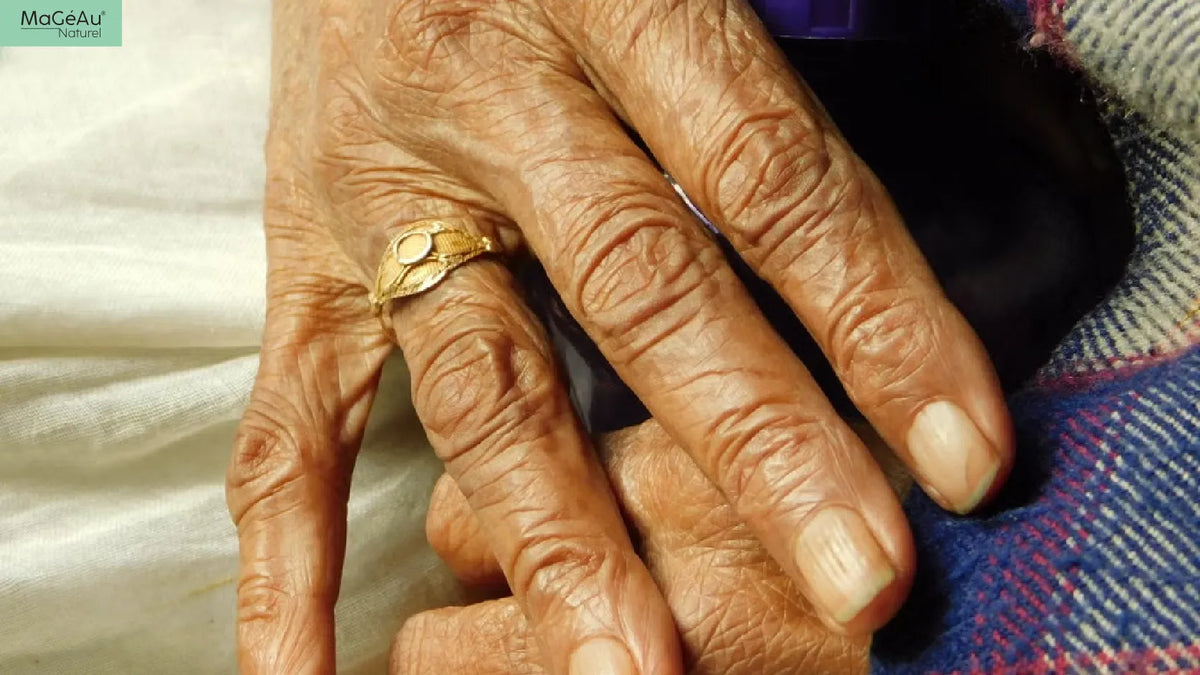
You've used the same moisturizer for years. It never caused a single problem. Then, somewhere in your forties or fifties, it starts to sting a little. Your shins itch in winter. A new body wash leaves you tight for hours. Nothing in your routine has changed, but your skin seems to have changed its mind about almost everything.
If that sounds familiar, you're not imagining it. Skin changes as it matures, and some of those changes make it feel more sensitive. This isn't an anti-ageing guide, and nothing here is about turning back the clock. It's about understanding what's happening, and how to keep mature skin comfortable, soft and well supported.
What Actually Changes as Skin Matures
A few things shift with age, and they tend to work together:
The skin gets thinner. The outer layers of skin become thinner and more delicate over time, so there's less of a cushion between the outside world and the nerve endings underneath.
Oil production drops. According to a report published by aad.org, the American Academy of Dermatology explains that with age, skin produces less sebum, the oil that keeps skin soft, and that by your 40s the amount of sebum your body makes drops dramatically. The AAD also states that by 60 years of age, nearly everyone has dry skin.
The barrier recovers more slowly. This one is less well known, and it explains a lot.
Think of your skin barrier like the roof on a house. When it's newer, a slipped tile gets fixed quickly and the rain never gets in. As the roof ages, it doesn't necessarily leak all the time, but each storm takes longer to repair, and small gaps stay open for longer. Mature skin isn't broken. It's just slower to patch things up.
Also Read: Anti-Ageing is a Scam. Your Skin Doesn't Need Fixing, It Needs Respect
What the Research Shows About the Ageing Barrier
One of the clearest studies on this comes from dermatology researchers at the University of California, San Francisco. According to a report published by jci.org, a study in the Journal of Clinical Investigation compared young adults (20 to 30 years) with people over 80. The researchers found that the older group's barrier was disrupted more easily: it took about 18 tape strippings to disrupt it, compared with about 31 in younger skin. Recovery was slower too. After 24 hours, younger skin had recovered about 50% of its barrier function, while older skin had recovered only about 15%.
Here's the interesting twist. Under normal conditions, the older group's skin didn't lose more water than the younger group's. The authors warned that measuring barrier function at rest in aged skin "is misleading," because the problem shows up when the skin is challenged and has to repair itself.
That matches what many people notice day to day. Mature skin can seem fine until something challenges it: a harsh cleanser, a long hot shower, dry heated air, a new product. Then it reacts more, and takes longer to settle.
The study looked at people over 80, so changes in your 40s and 50s are gentler. But the direction is the same.
Also Read: Contact Dermatitis: When Your Skincare Routine Is the Trigger
Hormones and Life Changes Play a Part Too
For many women, menopause brings noticeable skin changes, including more dryness and a feeling that skin has become less tolerant. Medications, health conditions and treatments can also affect how skin behaves as we get older. The AAD lists some medications, including statins and diuretics, among the causes of dry skin.
If your skin has changed suddenly, or alongside other symptoms, it's worth mentioning to your doctor or dermatologist. Not every change is simply age.
Also Read: Menopause: Impact on Skin and Natural Solutions
Cleansing Mature Skin Gently
If your barrier is easier to disrupt and slower to recover, the first place to look is how you wash. Cleansing is the one thing most of us do every single day.
- Use lukewarm water. Hot water removes the oils mature skin is already short on.
- Keep showers short. The AAD's dry skin advice suggests five to ten minutes.
- Choose a mild cleanser and use less of it. On the body, a gentle magnesium shower gel only where you need it (underarms, groin, feet) is often enough. Shins and forearms rarely need soap every day.
- One cleanse is enough. Unless you're removing heavy makeup, a double cleanse is often more than mature skin needs.
- Pat dry. Rubbing with a towel adds friction to thinner skin.
Also Read: Double Cleansing for Sensitive Skin: Worth It or Too Much?
Moisturizing for Comfort and Barrier Support
Moisturizer won't reverse ageing, and anyone who promises that is selling something. What it can do is support the barrier, reduce dryness and tightness, and make skin feel more comfortable.
Moisturize while skin is damp. Apply within a few minutes of your shower to hold in water.
Go richer as you get older. The AAD notes that creams and ointments are more effective moisturizers than lotions. A magnesium body lotion works well for everyday use, and a few drops of magnesium body oil pressed over the top can help on very dry areas like shins, elbows and the backs of the hands.
Don't forget your hands. Hands show dryness early and get washed often. A magnesium hand lotion after every wash helps them feel more comfortable.
Moisturize more than once a day. The AAD recommends moisturizing several times a day when skin is dry, not just after showering.
Also Read: What Order Should You Actually Apply Skincare In?
Simplify Your Routine
It's tempting to add more products as skin changes, especially with so much "anti-ageing" marketing. For sensitive, mature skin, the opposite often works better.
Introduce new products one at a time. Since mature skin takes longer to recover from irritation, a reaction to one product can make the whole routine feel unpredictable. Patch test first, and wait a week or two before adding anything else.
Go easy on strong actives. Retinoids, strong acids and scrubs can be harder on thinner, slower-recovering skin. If you use them, use them less often, and ask your dermatologist what makes sense for you.
Choose fragrance-free where you can. The AAD recommends products labelled fragrance-free for dry skin. Check the ingredient list on every product, ours included, for "parfum" or "fragrance."
Protect from the sun every day. Sunscreen supports healthy skin at any age. A lip balm with SPF helps lips too.
Also Read: Are Bar Products Right for Sensitive Skin? The Honest Pros and Cons
When to See a Dermatologist
Some skin changes deserve a professional look. See a dermatologist if:
- Itching keeps you awake or doesn't improve with moisturizer
- Your skin cracks, bleeds or bruises very easily
- You notice red, scaly or rough patches that don't settle
- A mole or spot changes in size, shape or colour
- You have a skin condition such as psoriasis or eczema that has changed or become harder to manage
A dermatologist can check what's behind the change and recommend the right care for your skin.
Also Read: Psoriasis-Prone Skin? How to Keep Your Routine Gentle and Comfortable
At the end
Mature skin often feels more sensitive because it's thinner, makes less oil and takes longer to recover when it's challenged. The answer isn't a stronger anti-ageing routine. It's a gentler one: lukewarm water, mild cleansing, richer moisturizing, fewer new products at once and daily sun protection. Your skin has looked after you for decades. A little extra comfort is a fair trade.
Skin doesn't need fixing as it ages. It needs a softer touch.
Disclaimer: This article is intended for educational and informational purposes only and does not constitute medical advice. Always consult a qualified dermatologist or healthcare professional before making changes to your skincare routine, particularly if you have an existing skin condition.


Comments (0)
There are no comments for this article. Be the first one to leave a message!