


If you’re someone who has been diligently washing your face, following a carefully curated skincare routine, and yet those stubborn little bumps just won’t quit. You’ve tried every serum, every toner, every ‘new’ product out there on the internet, but it didn’t help. What if the answer isn’t on your bathroom shelf at all, but on your plate?
Fungal acne is one of those frustrating conditions that gets misdiagnosed, mistreated, and misunderstood, mostly because it looks a lot like regular acne but plays by completely different rules. And one of the biggest (and most overlooked) rules? What you eat matters enormously.
So, let’s get into the science, separate the facts from the folklore, and give your skin some seriously good dietary intel.
Also read: Why Trust Géraldine, The Cancer Survivor Behind MaGéAu Naturel
What Actually Is Fungal Acne?
Before we go deep down the fridge and start throwing out the biscuits, let’s make sure we’re talking about the same thing.
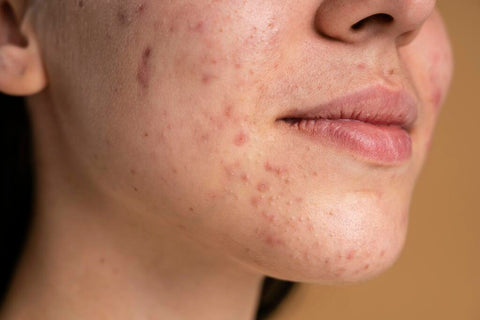
Fungal acne, officially known as Malassezia folliculitis, is not your everyday bacterial breakout. According to Skynbio, it stems from an overgrowth of Malassezia, a yeast that naturally lives on everyone’s skin. When triggered, it clogs hair follicles and produces small, uniform, sometimes itchy bumps, most commonly on the forehead, chest, and back.
The keyword there is “overgrowth.” Malassezia is always present on your skin; the problem only starts when something tips the balance in its favour. And that something can absolutely include an imbalanced diet, antibiotics, stress, or a disrupted gut microbiome. Basically, your skin is waving a little flag that says, “something’s off inside.”
Also read: Understanding the Causes and Symptoms of Fungal Acne
Your Gut and Your Skin Are Having a Constant Conversation
Here’s the thing nobody tells you in the skincare aisle: your gut and your skin are deeply, biologically connected.
According to a review published by Dermatology Times, the gut microbiome acts as a dynamic interface between diet, metabolism, and immune signalling, and when it gets disrupted, the ripple effects show up directly on your skin. Diets high in fat and sugar have been found to promote dysbiosis and increase inflammation, while diets rich in fibre, antioxidants, and omega-3 fatty acids support healthy microbial diversity.
You see, follicular skin disorders are not just tricky; they require sensitive skincare. And that’s why our Magnesium face cleanser and Magnesium body lotion work alongside other ingredients to restore the skin's moisture balance, leaving it soft, supple, and glowing. With regular use, you’ll notice an improvement in your skin’s radiance as it becomes more even-toned and bright.
Fungal Acne Foods to Avoid: The Not-So-Innocent Culprits

1. Stop eating Sugar and refined carbohydrates
Let’s start with the big one. Sugar is essentially a five-star buffet for Malassezia yeast; it feeds directly on it and gets very comfortable very quickly. According to Fiona Lawson Nutrition, a core principle of the anti-fungal diet is reducing or eliminating foods that promote yeast growth, with sugar and refined white flour products sitting firmly at the top of the list.
A low-sugar, low-glycemic diet is one of the most consistently recommended dietary approaches for managing fungal acne, because when blood sugar spikes, insulin follows, and elevated insulin levels increase oil production, creating exactly the sebum-rich environment that Malassezia loves. Think fizzy drinks, white bread, pastries, sweets, and heavily processed breakfast cereals. Not forever, not all at once, but reducing these gradually is a genuinely useful first step.
2. Say no to Dairy products
Dairy is a complicated one, because it’s not inherently evil; it’s just that its hormonal profile can be a problem for some skin types. According to a comprehensive review published in the International Journal of Dermatology (Wiley), consumption of dairy and simple carbohydrates is known to increase levels of insulin, both of which are linked to increased inflammation and sebum production around the hair follicle.
The same review noted that in a survey of 242 patients with follicular skin disorders, 75.8% had made dietary alterations, with dairy being the food item most commonly identified as a trigger, and 30.9% reported significant symptom improvement after cutting it out.
That’s not a guarantee, but it’s a number worth sitting with. If you’re not ready to go full dairy-free, even a temporary reduction can be worth trying to see how your skin responds.
Also Read: Best Fungal Acne Treatment: How to Get Rid of It?
3. No High-fat and ultra-processed foods
Junk food and processed snacks are the gift that keeps on giving, and not in a good way. According to research cited by Dermatology Advisor, a high-fat diet has been directly linked to follicular hyperkeratosis, essentially, the clogging of hair follicles, by increasing a type of immune cell activity that promotes inflammation around the follicle. In simple terms, the more saturated fat and processed food in your diet, the harder your follicles have to work, and the easier it becomes for yeast to set up camp.
Swapping the ultra-processed snacks for whole-food alternatives isn’t just better for your skin; it’s better for your gut, your mood, and your energy levels. A triple win.
4. Alcohol
Alcohol is one of those social lubricants that also, unfortunately, lubricates the path to skin flare-ups. You see, Beer and wine fall squarely on the list of yeast-containing foods recommended for reduction or elimination on an antifungal diet. Brewer’s yeast in particular has been examined in clinical research: according to Dermatology Advisor, three studies found that following a yeast-free diet for between three and twelve months was associated with measurable improvement in follicular skin lesions, symptoms, and flare-up frequency.
Moderation is key here; a special occasion glass is unlikely to cause chaos, but regular drinking as a habit is worth re-examining if your skin is struggling.
Also Read: 5 Best and Simple Steps to Prevent Fungal Acne
5. Foods naturally high in yeast
This one catches people by surprise. You see, an antifungal diet also involves reducing foods that contain yeast directly, including vinegar, mushrooms, beer, and wine. These aren’t foods most people associate with skin problems, but when you’re already dealing with a yeast overgrowth on your skin, adding more yeast into your system internally isn’t exactly helping your cause.
It’s worth temporarily pulling back on these during an active flare-up and observing whether things settle down.
Diet for Fungal Acne:

Well, this is Good news: it’s not all a list of things to give up. I promise that the diet for fungal acne has a genuinely delicious ‘yes’ column, and here’s where things get really interesting.
Probiotic-rich foods
If you’re going to focus on one dietary change above all others, make it adding more probiotics. According to Acibadem Health Point, probiotics are one of the most consistently recommended dietary tools for managing fungal acne because they help restore the gut flora balance that keeps yeast overgrowth in check. Supplementation with probiotics, including Lactobacillus and Bifidobacterium strains, has shown genuine additive benefits in clinical trials for inflammatory skin conditions.
Your probiotic-rich foods are:
-
Natural yoghurt (unsweetened)
-
Kefir
-
Sauerkraut
-
Kimchi
-
Miso
-
Kombucha.
These aren’t just trendy health foods; they’re doing active work inside your gut that eventually shows up on your skin.
Anti-inflammatory and antifungal foods
According to Corum Products, a range of natural antifungal spices has been identified as useful allies against Malassezia, including turmeric, ginger, cinnamon, black pepper, oregano, thyme, and clove. These aren’t miracle cures, but weaving them consistently into your cooking adds genuine antifungal and anti-inflammatory support to your diet without requiring any dramatic overhaul.
Omega-3-rich foods are equally important. According to Dermatology Times, omega-3 fatty acids support microbial diversity and reduce inflammatory signalling throughout the body. Foods like flaxseeds, walnuts, and cold-water fish such as salmon and trout are among the most beneficial choices. Think of them as a long, slow anti-inflammatory hug for your skin.
Also Read: Reduce, Reuse, Refresh: Discover Our Refillable Beauty Essentials
Whole grains, lean proteins, and zinc-rich foods
Zinc-rich foods have also been found to have beneficial effects on a variety of skin conditions, and they’re worth prioritising in a diet for fungal acne. Pumpkin seeds, chickpeas, lentils, cashews, and lean meats are all excellent sources. Zinc is well known for its role in skin repair and immune function, and an immune system that’s functioning well is a natural line of defence against yeast overgrowth.
Pair those with whole grains (brown rice, quinoa, oats) instead of their refined counterparts to keep blood sugar steady and avoid those insulin spikes that Malassezia exploits. Steady blood sugar means less sebum, less sebum means less food for yeast, and less food for yeast means calmer skin. It’s a delightfully logical chain reaction.
Diet Helps, But It Isn’t the Whole Story
Let’s keep it real. Diet is a powerful supporting tool, but it’s not a standalone cure. Current evidence suggests that dietary interventions should be used as adjuncts to medical therapy for follicular skin conditions, not as replacements. The research is genuinely promising and growing, but medical treatment remains an important part of the picture for many people.
Cutting back on the foods that cause fungal acne, like sugar, dairy, alcohol, high-fat processed foods, and yeast-containing items, while loading up on probiotics, omega-3s, antifungal spices, and zinc-rich whole foods, is one of the most evidence-backed things you can do to support your skin’s recovery from the inside out.
It’s not about being perfect. It’s not about giving up everything you enjoy overnight. It’s about making small, consistent shifts that tip the microbial balance back in your skin’s favour, one meal at a time.
In the epic saga of skincare, diet is but one chapter.
And with that in mind, our sustainable skincare product by MaGéAu Nature can bring an exceptional change to your sensitive skin. Our Magnesium hand lotion and Magnesium lip balm, crafted with 100% natural and vegan ingredients, offer a holistic solution to nurture your skin from the outside. 🌻
Medical disclaimer:
This article is intended for educational and informational purposes only and does not constitute medical advice. Fungal acne and folliculitis are medical conditions that may require professional diagnosis and treatment. Always consult a qualified dermatologist, GP, or registered dietitian before making significant changes to your diet or skincare routine, particularly if you have an existing health condition.


Comments (0)
There are no comments for this article. Be the first one to leave a message!